In Israel's 2026 rental market — where prices keep climbing and available apartments disappear within hours — knowing your rights as a tenant isn't just a nice-to-have. It's survival. Too many renters sign a lease without reading the fine print, only to discover months later that their landlord is demanding unfair charges, refusing to fix a broken boiler, or threatening eviction without legal grounds.
This guide covers everything you're entitled to under Israeli law — when your landlord must make repairs, when they absolutely cannot raise your rent, and exactly how to handle the situations that most tenants don't know how to navigate.
Right #1: A Home That's Actually Livable
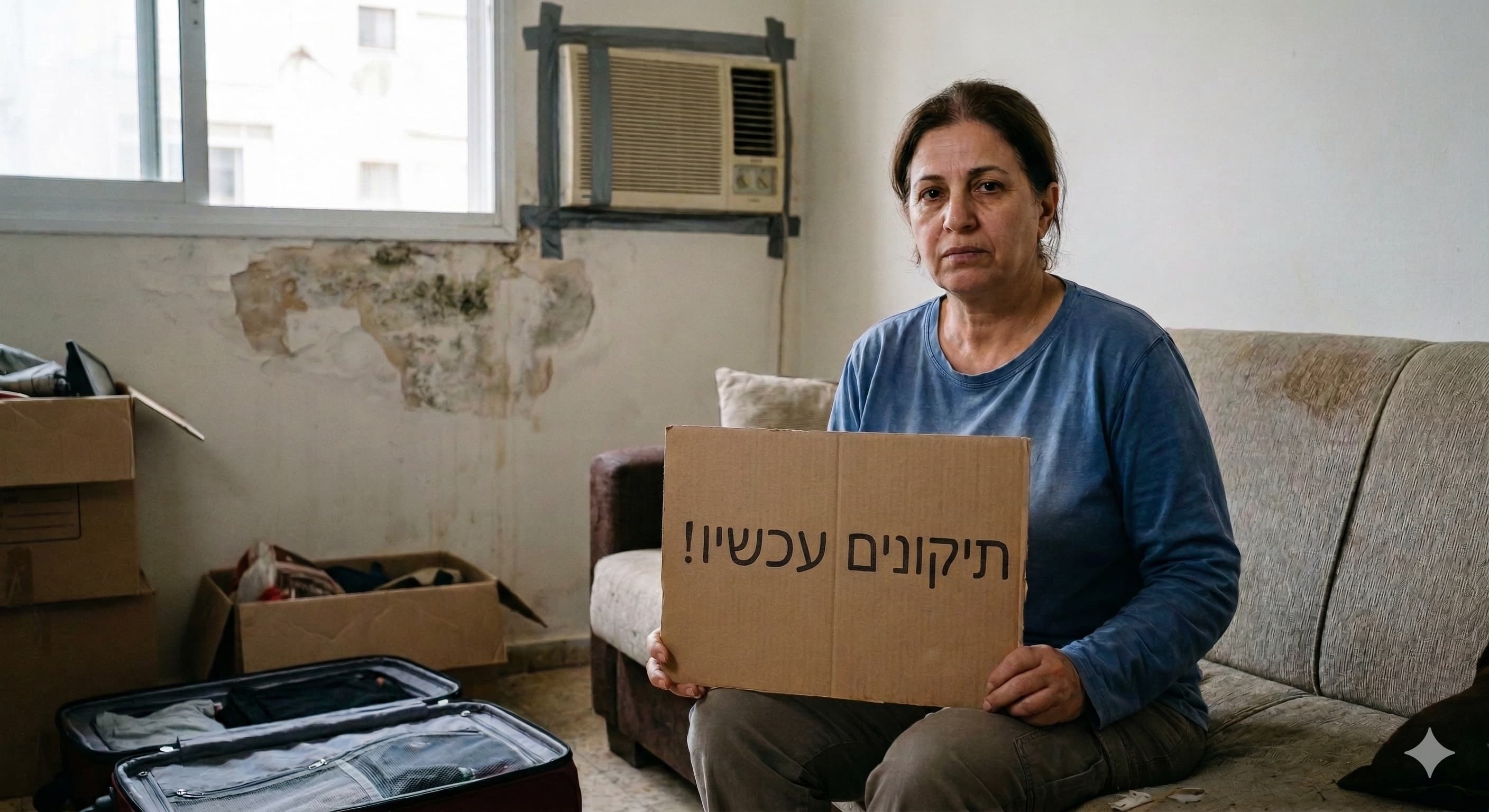
Your most fundamental right as a tenant is simple: the property must be fit to live in. This isn't a favor your landlord grants you — it's a legal obligation. That means electricity, running water, sewage, gas (if included), and any appliance specifically mentioned in your contract must all be in working order when you move in, and must stay that way.
Good to Know
If your landlord fails to fix a serious issue within a reasonable timeframe — typically 7 to 14 days — you are legally entitled to repair it yourself and deduct the cost from your rent. But only after you've documented everything in writing first.
Your Privacy Is Protected — Even From Your Landlord
The golden rule: your landlord cannot enter your apartment without your consent. Full stop. The only exception is a genuine emergency — a serious leak, a fire, or immediate risk to the property. Even then, they should call you first if at all possible.
If your landlord insists on entering over your objection, remind them that doing so is a violation of your privacy rights — and that you're within your rights to contact the police.
When a Landlord Can Evict You — and When They Can't
Legal Grounds for Eviction
Consistently failing to pay rent, seriously breaching the terms of your contract, causing deliberate damage to the property, using the apartment for illegal purposes
Illegal Grounds for Eviction
Wanting to raise the rent mid-contract, wishing to renovate (unless urgently necessary), selling the apartment (the buyer is bound by your contract), finding a tenant willing to pay more
Remember
Even when a landlord has legitimate legal grounds, they cannot simply throw you out. They must file a claim in court and obtain an eviction order. That process typically takes months.
Repairs: Who Pays for What?
Responsibility Breakdown
Landlord's Responsibility
Heating and cooling systems, plumbing (pipes, toilets, faucets), electrical systems (circuit boards, outlets, switches), structural issues (cracks, leaks, windows), flooring and paintwork — unless you caused the damage
Tenant's Responsibility
Damage you caused yourself (broken glass, scratched flooring), minor routine upkeep (replacing light bulbs and batteries), general cleanliness and mold prevention
Dana's Story
Dana, renting in Rishon LeZion, had a solar water heater included in her lease. Mid-winter, it stopped working. Her landlord claimed she hadn't cleaned it properly. Dana sent a simple message: "The heater was in the apartment when I moved in. A failure in a core system is your legal responsibility. I expect a repair within 48 hours — otherwise I'll fix it myself and deduct the cost from rent." The landlord fixed it within two days.
Key Tip
Always report issues in writing — SMS, WhatsApp, or email. If a dispute ever reaches court, your paper trail is your best evidence that you reported the problem and your landlord ignored it.
Make sure your lease protects your rights
Rent Increases: What's Allowed and What Isn't
During an Active Contract
While your contract is in force, your landlord cannot raise your rent unilaterally. The only exception is if both of the following conditions are met:
- 1.It's explicitly written in the contract — for example, "rent will be adjusted annually in line with the CPI index"
- 2.The increase follows a pre-agreed mechanism — a fixed percentage, a specific index, etc.
At Contract Renewal — That's When You Negotiate
Tips for Renewal Negotiations
Start Early
Begin the conversation two months before your contract ends
Know the Market
Check what comparable apartments in your area are actually renting for
Highlight Your Track Record
Always paid on time? Kept the place in great shape? Say so — it matters
Offer a Longer Contract
Most landlords value stability over a small short-term gain
The Security Deposit: Easy to Hand Over, Hard to Get Back
What Can (and Can't) Be Deducted
Legitimate Deductions
Real damage you caused, unpaid rent, documented repair costs (invoices required)
Not Legitimate
Normal wear and tear (faded paint, minor scuffs), upgrades the landlord wants to make, pre-existing damage, inflated repair costs
The Golden Rule
Photograph everything when you move in and when you move out. Every corner, every wall, every surface. Those photos are your insurance against unfair deductions.
Michal's Story
Michal left her Haifa apartment after two years. Her landlord tried to deduct ₪3,000 for "floor damage and scratches." Michal sent him photos from move-in day showing the scratches were already there, photos from move-out day showing the apartment in clean condition, and a formal demand letter. The landlord returned the full deposit.
When Things Go Wrong: A Practical Action Guide
Scenario 1: Your Landlord Is Ignoring a Serious Problem
You've called, you've messaged — and heard nothing back. The hot water has been out for two weeks.
Days 1–2
Send a clear WhatsApp or SMS: "The water heater in the apartment has been broken since [date]. There's no hot water. I'm asking for an urgent repair within 48 hours."
Days 3–7
No response? Follow up: "I haven't heard back. I'm giving another 3 days. After that, I'll arrange the repair myself and deduct the cost from rent."
Day 8+
Fix it yourself. Save the invoice. Deduct it from your next rent payment. Message your landlord: "I repaired the water heater. Cost: ₪1,200 (invoice attached). I will deduct this from the next rent payment."
Scenario 2: Your Landlord Wants to Show Up Unannounced
"I'll be there in 10 minutes to check something" — a message no tenant should have to accept.
The Right Response
"I appreciate the heads up, but now isn't a good time for me. Can we schedule a visit with 24 hours' notice?"
If They Push Back
If your landlord enters by force, that's a privacy violation. Document the incident and consider seeking legal advice.
Scenario 3: A Dispute Over Your Security Deposit
You left the apartment clean and in good condition — and your landlord is claiming ₪2,500 in "damages."
Step 1
Ask for a formal breakdown — a written itemized list of each claimed damage and its exact cost
Step 2
Compare against your documentation — this is when your move-in and move-out photos do their job
Step 3
Send a written objection with your evidence. Demand a full refund within 7 days.
Step 4
No resolution? File in small claims court. It's straightforward, inexpensive (filing fee ~₪200), and you don't need a lawyer.
How to Protect Your Rights From Day One
Move-In Documentation: Don't Skip This
Photograph every room from every angle
Close-ups of every scuff, crack, or stain
Test and document that all appliances work
Photograph water and electricity meters
Back everything up to the cloud (Google Photos, Dropbox)
3 Rules for Staying Protected Throughout Your Tenancy
Read Your Contract
Twenty minutes of careful reading can save you months of headaches. Pay attention to repair responsibilities, rent increase clauses, and security deposit terms.
Put Everything in Writing
Every issue, request, or complaint — send a message. SMS, WhatsApp, email. "I told him" won't hold up in court. "I sent him a message on this date" will.
Know That Your Rights Aren't Optional
Your rights don't depend on your landlord's goodwill. They exist in law and they belong to you — whether your landlord acknowledges them or not.
The Bottom Line: Knowledge Is Your Leverage
The Essentials to Keep in Mind
You're entitled to a livable home — that's not a courtesy, it's the law
Your privacy is protected — your landlord cannot enter without your consent
Rent cannot be raised mid-contract unless it's specifically written in the agreement
Your security deposit comes back to you — unless you caused real, documented damage
Documentation is your most powerful tool — photograph everything
Landlord disputes don't have to be the stressful, confusing ordeals they're known to be. With the right knowledge and a few simple habits, you can protect what's yours — and enjoy a far smoother renting experience.
FAQ: what a landlord may and may not demand
- What can a landlord demand from a tenant in Israel?
- A landlord may ask for what the rental transaction requires: identifying details for the contract, evidence of ability to pay such as payslips, guarantors, and securities such as a deposit and a security cheque. They may not demand a waiver of rights the law makes non-waivable, and they may not take monetary securities above the cap in the Rental and Loan Law: the lower of one third of the rent for the whole term or three months of rent.
- Can a landlord ask to see a tenant’s ID?
- Yes, to identify the parties to the contract. The tenant’s ID number appears in every standard Israeli lease and is needed to enforce the contract and to draw on securities. That said, the landlord is holding personal data and is subject to the Protection of Privacy Law: they may collect only what the transaction requires, must keep it reasonably secure, and may not pass it to a third party without consent. There is no legal obligation to hand over documents unrelated to the transaction.
- Can a landlord enter the apartment without arranging it first?
- No. During the lease term possession belongs to the tenant, and entering without consent is a privacy violation even if the landlord holds a key. The only exception is a genuine emergency such as a serious leak or immediate danger to the property, and even then they are expected to make contact first if at all possible. It is worth writing reasonable notice and reasonable hours into the contract.
- Who pays for repairs in a rented apartment?
- Faults in the apartment’s systems and reasonable wear are the landlord’s responsibility: plumbing, electrics, heating and cooling, structure, leaks and cracks. Damage caused by the tenant’s unreasonable use, and light routine upkeep such as replacing bulbs, are the tenant’s. Report every fault in writing, because the written notice is what proves when you asked for a repair.
- Can a landlord raise the rent mid-contract?
- No, unless the contract itself sets out an agreed adjustment mechanism, such as index linkage or a known increase in the second year. Without such a mechanism the rent set in the contract holds for the whole term. At the end of the contract the landlord may propose new terms, which is a negotiation rather than a unilateral increase.
- Can a landlord evict a tenant mid-contract?
- Only on legal grounds, such as consistent non-payment, a material breach of the contract, deliberate damage, or illegal use of the apartment. Even then there is no self-help eviction: the landlord must go to court and obtain an eviction order, and the process takes months. Wanting to raise the rent, renovate, or sell is not grounds for eviction, and a buyer steps into the landlord’s shoes and is bound by the existing contract.
Starting a new lease? Create your contract now — LeaseLink builds professional lease contracts with all the clauses that protect both sides, verified digital signatures, cloud storage, and a complete activity log. Before signing, it is worth understanding what unprotected tenancy means and how digital lease contracts and remote signing work — and if you prefer a document to fill in by hand, our free template is open to download.